Curve Monthly Recap October 2026
Curve went live on Stellar, Llamalend V2 opened its first market backed by a Curve LP position, and weekly fee payouts to veCRV holders averaged 12% more than in September.


Key highlights of October
- Curve is live on Stellar, its first deployment built for a chain outside the EVM
- LPs can borrow crvUSD against a Curve LP position in Llamalend V2, which keeps earning while it backs the loan
- veCRV holders earned more as Curve pools brought the DAO more in trading fees
- crvUSD held close to $1 through the month's busiest trading day
Curve is live on Stellar
Stablecoin traders on Stellar can now swap at close to one-for-one on Curve, and holders can earn a share of trading fees by depositing into a pool. The app is in beta at stellar.curve.finance, and swaps there earn for veCRV holders as on every Curve deployment.
Stellar carries regulated stablecoins and tokenized funds that need places to trade against each other. Every earlier Curve deployment runs on the EVM, the system behind Ethereum and the other chains Curve uses, so Curve rebuilt its pools for Stellar, with support from the Stellar Development Foundation (announcement).
Borrow against your Curve LP position
Curve LPs can now borrow crvUSD without withdrawing their liquidity. The DAO opened the first Llamalend V2 market on Ethereum that takes a Curve LP position as collateral, reUSD/sfrxUSD, and the position keeps earning trading fees while it backs the loan.
The DAO also approved a gauge for this collateral, so LP tokens used as collateral can earn CRV rewards; the gauge has no boost for collateral. With leverage in the app on this market, LPs can now loop against their position, and asset issuers can focus incentives on one market to get both liquidity and utility for their token.
Other lenders accept Curve LP positions too: Tangent now lets LPs borrow its USG stablecoin against CVX/ETH and crvUSD/frxUSD Curve LP positions.
More fees for veCRV holders
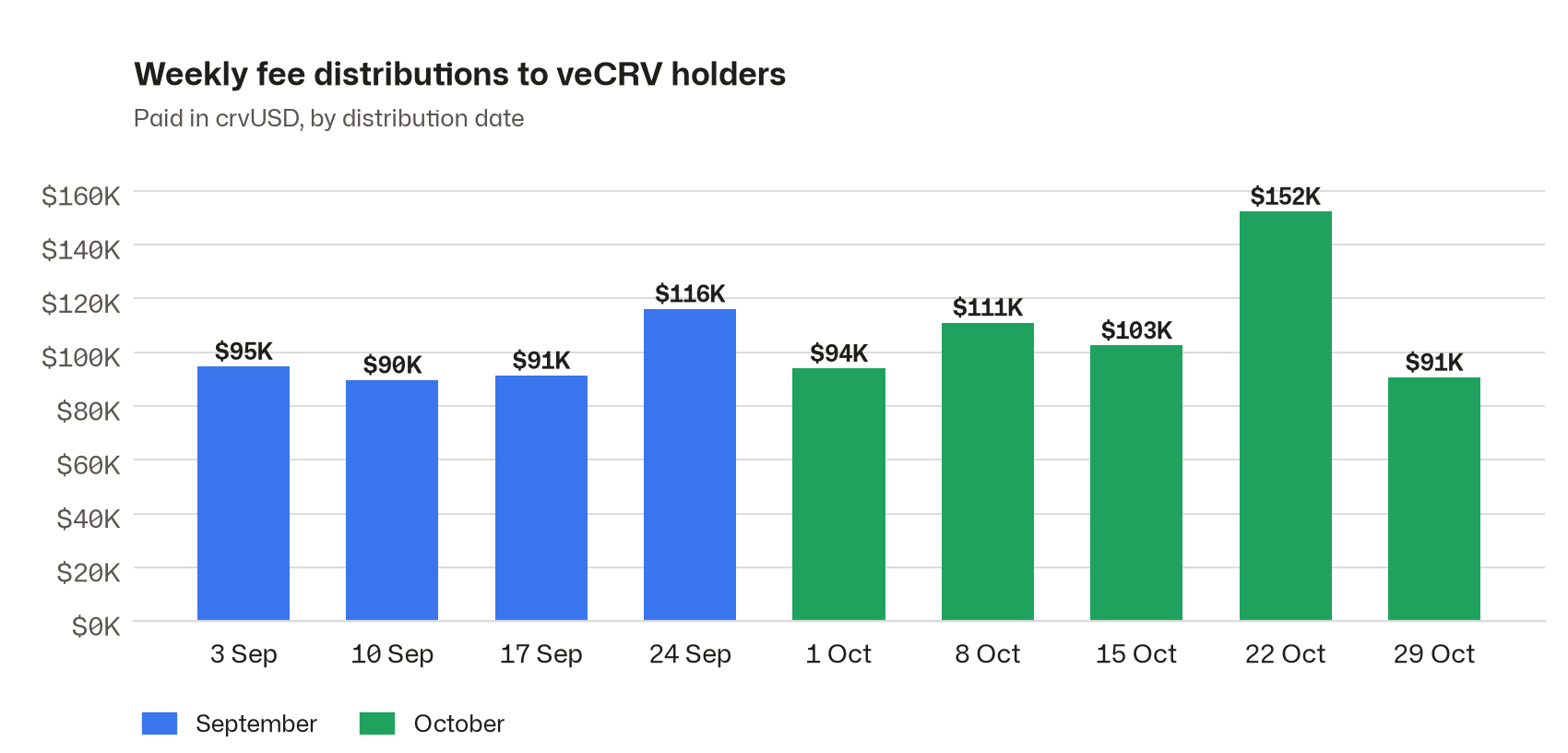
veCRV holders, who lock CRV to vote on Curve, received $551K over October's five weekly payouts, as Curve pools earned the DAO more in trading fees than in September.
crvUSD held its peg on the busiest day
crvUSD stayed close to $1 across its main pools on 29 October, the month's busiest day, when Curve pools traded more than ten times a typical October day. Liquidation Protection, which shifts a loan's collateral gradually instead of liquidating it at once, kept 48 of the 49 loans it covered that day open.
In October, crvUSD's monetary policy raised the average borrow rate from 3.7% to 5.7% to hold crvUSD at $1, which also pays scrvUSD savers more.
More room to borrow against yield-bearing tokens
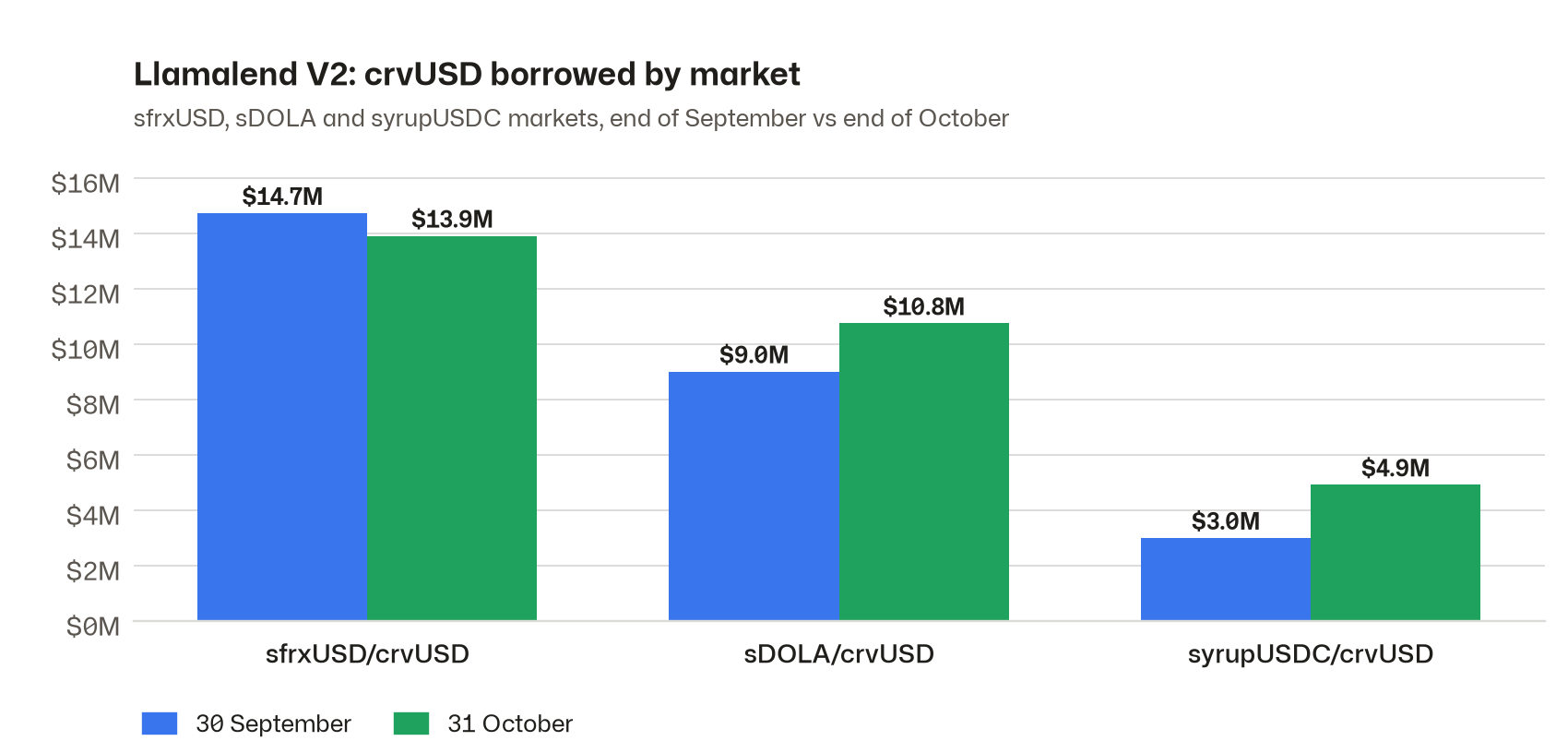
Savings and lending tokens keep earning their yield in Llamalend V2 while they back a crvUSD loan. Borrowing against them on Ethereum grew 10% to $30M in October, and Maple's syrupUSDC, which earns interest from Maple's loans to institutions, accounted for most of the growth.
Borrowers against Resupply's sreUSD savings token also have more room: the DAO doubled the crvUSD it supplies to that market to 60M.
Stablecoins and Yield Basis grow on Curve's liquidity
Stablecoin issuers use Curve as a place where their holders swap and borrow. fxUSD holders can swap in and out at close to one-for-one with USDC in a Curve pool that was one of Curve's five busiest on Ethereum in October, and holders of sDOLA, the savings token of Inverse Finance, can borrow crvUSD against it in a Llamalend V2 market whose borrow cap is now twice as large. LPs in the new avUSD/savUSD and frxUSD/sVUSD pools of Avant and Vetro can now earn CRV.
Traders in the WETH/crvUSD pool of Yield Basis, a separate protocol whose depositors earn trading fees from its BTC and ETH pools on Curve, now get prices closer to the market, after a Curve DAO vote let the pool price trades from live market data.
See costs and liquidity before you borrow or deposit
Borrowers see their costs first: Llamalend market pages, now out of beta, lead with the borrow APR and supply APY, and the borrow form links straight to the collateral, or for LP collateral, to the pool where you deposit.
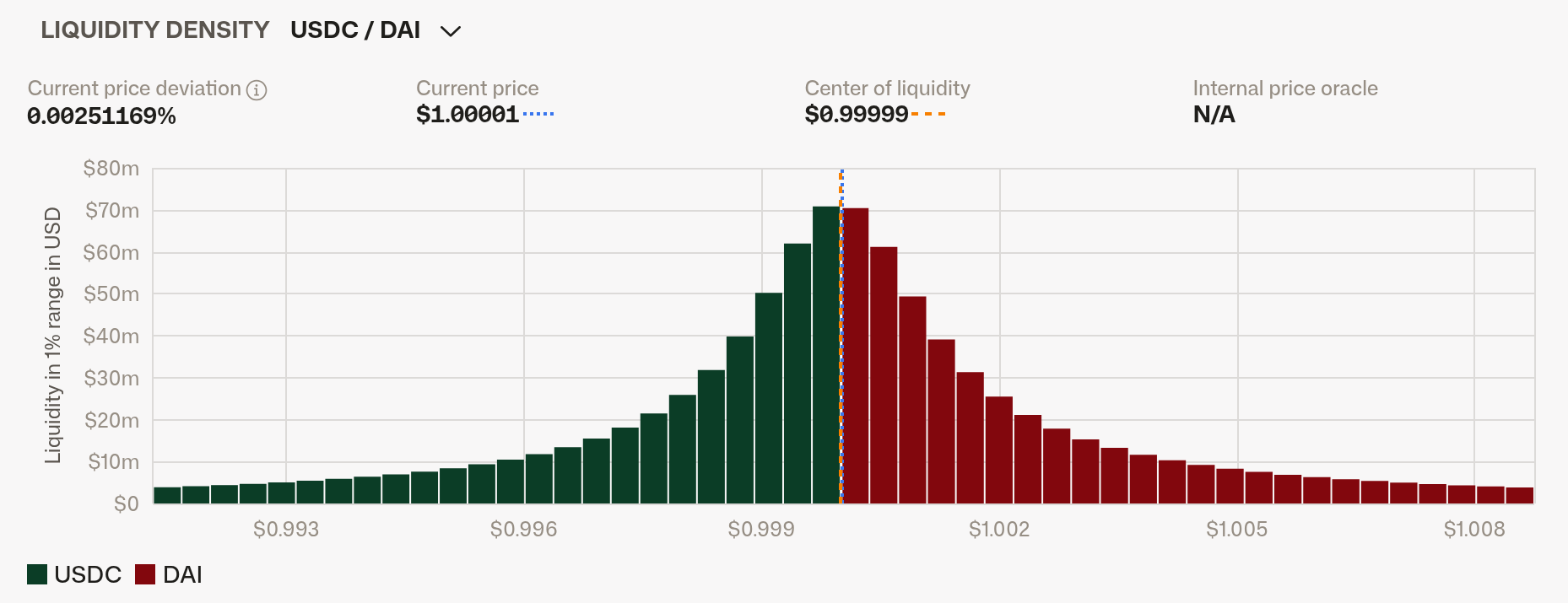
LPs can size up a pool before depositing: pool pages now show how much liquidity the pool has at each price, what it holds and its net APR at the top, and much of this works without a connected wallet.
Returning users save time: the pool list hides pools without liquidity, switching networks keeps you on the same page, and a new tab finds unclaimed rewards in pools you have already left.
What to watch in November
On Stellar, pool creation is coming to the interface, and FXSwap, Curve's pool design for pairs such as a dollar and a euro stablecoin, follows after its audit.