Curve Monthly Recap March, 2026
March brought FastBridge for instant L2-to-Ethereum crvUSD transfers, a new GHO PegKeeper, eased crvUSD borrow rates, the Curve Knowledge Hub launch, FXSwap simulation transparency, a 10x increase in the crvUSD flashloan cap, and Curve's presence at Stable Summit IV in Cannes.

Key Highlights of March
- FastBridge launched, enabling ~15-minute crvUSD withdrawals from L2s to Ethereum
- GHO PegKeeper created with a 3M crvUSD debt ceiling, deepening the Curve-Aave integration
- crvUSD borrow rates eased via governance, halving average rates from ~11% to ~5.6%
- Curve Knowledge Hub went live at docs.curve.finance, unifying all documentation
- FXSwap Simulations article published, showing how Curve optimizes pool parameters
- crvUSD flashloan cap raised from 3M to 30M crvUSD (Vote 1355) *
- Stable Summit IV in Cannes with Curve
- PancakeSwap code dispute – Curve flagged unauthorized use of StableSwap code
FastBridge: Instant L2-to-Ethereum crvUSD Transfers
The biggest infrastructure release of the month was FastBridge, which removes the seven-day withdrawal delay for crvUSD bridging from L2 networks back to Ethereum.
Using LayerZero cross-chain messaging combined with canonical bridge settlement, FastBridge enables crvUSD to move from Arbitrum, Optimism, or Fraxtal to Ethereum in roughly 15 minutes. An Ethereum-side vault releases pre-minted crvUSD upon receiving the LayerZero confirmation, while the canonical bridge settles in the background and replenishes the vault.
This is critical infrastructure for cross-chain peg stability. When L2 prices drift from mainnet, arbitrageurs can now respond immediately rather than waiting a week which helps keeping crvUSD closer to mainnet peg everywhere.
Safety mechanisms include debt ceilings per vault, daily bridge limits per L2, minimum bridge amounts, and an Emergency DAO kill switch.
 mo
mo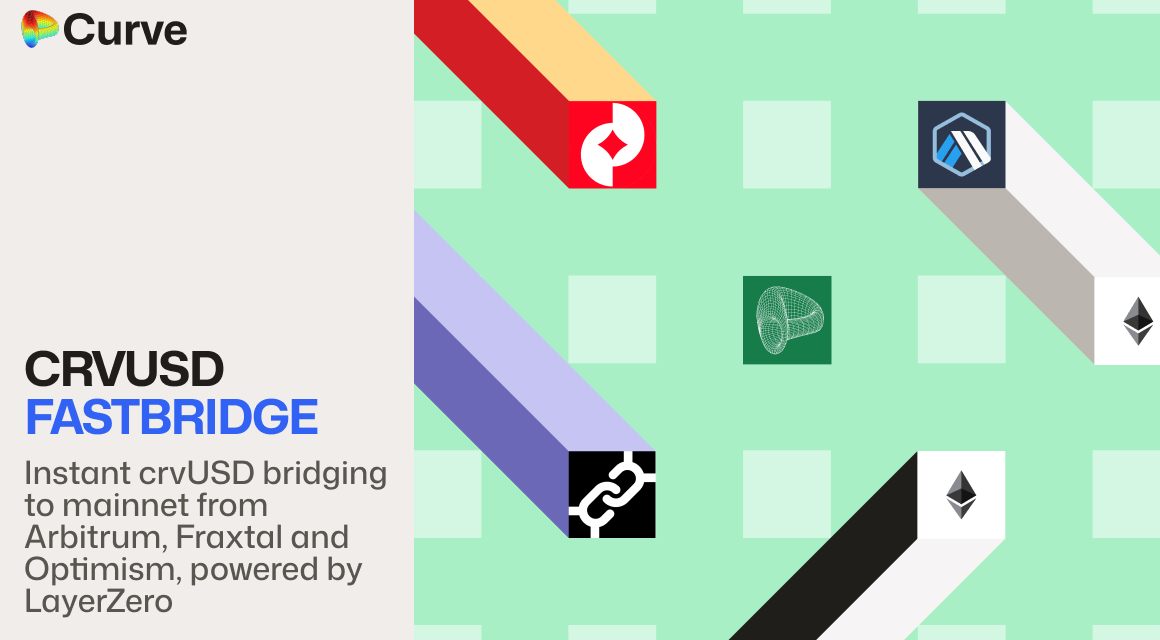
GHO PegKeeper: Curve x Aave Integration
Governance approved the creation of a new crvUSD PegKeeper for Aave's GHO stablecoin (Vote 1358), with a 3M crvUSD debt ceiling.
This initiates another cross-protocol milestone, linking crvUSD's peg defense infrastructure directly with Aave's GHO stablecoin liquidity. The PegKeeper can mint and deposit crvUSD into GHO/crvUSD pools to support peg stability for crvUSD.
crvUSD Borrow Rate Easing
Following the monetary policy changes introduced in January and the peg defense measures from February, March saw further easing of crvUSD borrow rates through Vote 1364 in order for the markets to stay competitive within DeFi.
Average borrow rates declined from ~11.1% at the start of the month to ~5.6% by month end, making crvUSD minting significantly more attractive. The peg remained stable throughout, trading between $0.9993 and $1.0000.
Curve Knowledge Hub
All Curve documentation was unified into a single platform at docs.curve.finance with the launch of the Curve Knowledge Hub.
The Hub consolidates user guides, developer references, protocol explanations, and a new "Build on Curve" section into one searchable destination. Key features include:
- Algolia-powered search with AI enhancements for natural language queries
- MCP integration for AI-assisted development workflows
- Ecosystem news from news.curve.finance integrated directly
- Beginner-friendly onboarding guides for users new to DeFi
 mo
mo
FXSwap Simulations: Behind the Scenes
A detailed article and video were published explaining how Curve uses large-scale backtesting simulations to optimize FXSwap pool parameters before deployment. Millions of parameter combinations are tested against years of historical price data to find configurations that minimize slippage, maintain pool balance, and maximize profitability.
FXSwap pools are already live on YieldBasis (BTC/crvUSD, ETH/crvUSD) and several FX pilot pools (CHF, GBP, BRZ, IDR). The publication increases transparency into Curve's AMM design process and provides a framework for asset issuers considering on-chain FX liquidity.
 mo
mo
PancakeSwap Code Dispute
Curve publicly flagged that PancakeSwap's "Infinity StableSwap" upgrade appeared to use Curve's StableSwap code without proper licensing. PancakeSwap acknowledged the concern and indicated willingness to engage. Curve signaled a collaborative resolution, noting it is "better to be friends and build together."
Dear @PancakeSwap. Looks like you copied our code without asking. It is violation of its license. Not only it is illegal: historically it showed to be unwise for those who did it this way in other regards.
— Curve Finance (@CurveFinance) March 6, 2026
In any case. If you want to enjoy using stableswap without legal… https://t.co/HkWWAQGXfs pic.twitter.com/UbIi7dpfkB
crvUSD Flashloan Cap Raised: 3M -> 30M
Governance approved Vote 1355, raising the crvUSD flashloan cap 10x from 3M to 30M crvUSD. The higher ceiling expands headroom for arbitrage, liquidations, and integrations that rely on flashloan-based routing through crvUSD, supporting deeper market efficiency around the peg without requiring locked-up capital.
Curve at Stable Summit IV
Stable Summit IV this year took place in Cannes with Curve as one of the main sponsors again. Curve contributors delivered several talks:
- Michael Egorov on YieldBasis and FXSwap: https://x.com/stable_summit/status/2037566367834997075
- Michael K. on FXSwap and the simulation pipeline behind pool parameter design: https://x.com/stable_summit/status/2037509236238712907
- 0xtutti on LlamaLend V2: https://x.com/stable_summit/status/2038553766459273448