Curve: 2025 Year in Review
2025 was a year of consolidation and quiet expansion for Curve, with heads-down building focused on strengthening liquidity and lending infrastructure while preparing for a new phase of growth in 2026.
Curve in 2025, by the Numbers
Pool creation increased year over year, with 2,209 new pools created in 2025 compared to 2,042 in 2024, an increase of roughly 8%. Trading activity also expanded. Total trading volume grew from approximately $119 billion in 2024 to $126 billion in 2025, while average protocol TVL increased from $2.86 billion to just over $3.05 billion.
On the usage side, activity shifted meaningfully toward lending and stablecoin infrastructure. Lending-related transactions increased from 234,000 to over 421,000, while crvUSD-related activity remained a core part of the protocol. Pool interactions more than doubled year over year, rising from 11.8 million to over 25.2 million transactions, showcasing sustained demand for Curve’s liquidity infrastructure.
Fee generation followed a similar trend. While total fees fluctuated during the year, Curve’s share of Ethereum DEX fees grew dramatically, rising from 1.6% at the beginning of 2025 to 44% by December, a 27.5x increase. Rather than being driven by a single product or market, this growth reflected Curve’s evolving role as shared infrastructure for stablecoin liquidity, lending, and emerging new use cases across the ecosystem.
Curve is nearly surpassing Uniswap in DEX fee dominance.
— naly (@defi_naly) December 18, 2025
This time last year, @CurveFinance contributed 1.59%; today, it accounts for 44.06% of all DEX fees on Ethereum. pic.twitter.com/dzpLUHIpAg
FXSwap: Bringing Foreign Exchange On-Chain
FXSwap was one of the most strategically important additions to Curve toward the end of 2025. It lays the foundation for bringing foreign exchange markets on-chain using Curve’s pricing philosophy.
FXSwap is designed for low-volatility asset pairs such as fiat-linked or synthetic FX assets, where predictable pricing and deep liquidity matter more than speculative trading. For users, this means the ability to swap between different currency-denominated assets on-chain with pricing behaviour that more closely resembles traditional foreign exchange markets.
In 2025, FXSwap moved from concept to reality. Pilot markets are currently being tested for CHF (Swiss franc), BRZ (Brazilian real), and IDR (Indonesian rupiah), marking early but meaningful steps toward real on-chain foreign exchange. Rather than launching dozens of pairs at once, Curve is validating FX markets and using early data to refine the design before broader expansion.
FXSwap is not about short-term volume. It is about building the missing infrastructure that allows stablecoins to trade against each other the way fiat currencies do in traditional finance.
Five Years of Curve DAO
In 2025, Curve DAO turned five years old, a milestone few DeFi protocols ever reach.
The anniversary was a reminder of what makes Curve different. Governance is embedded directly into the protocol, emissions and incentives are governed by code, and the DAO continues to operate without resets, migrations, or rewrites.
 mo
mo
That immutability was on display again in August, when the CRV emission rate was reduced exactly as programmed. No emergency votes and no governance drama, just the protocol doing what it was designed to do.
 mo
mo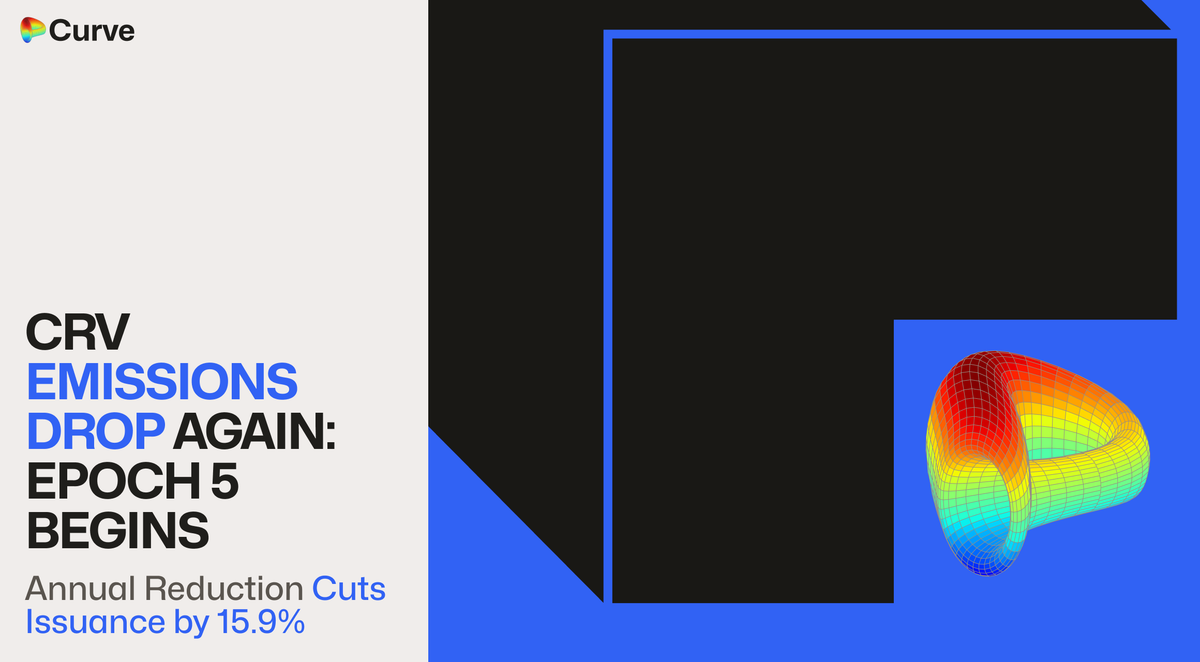
crvUSD and Llamalend: Maturing the Stablecoin Stack
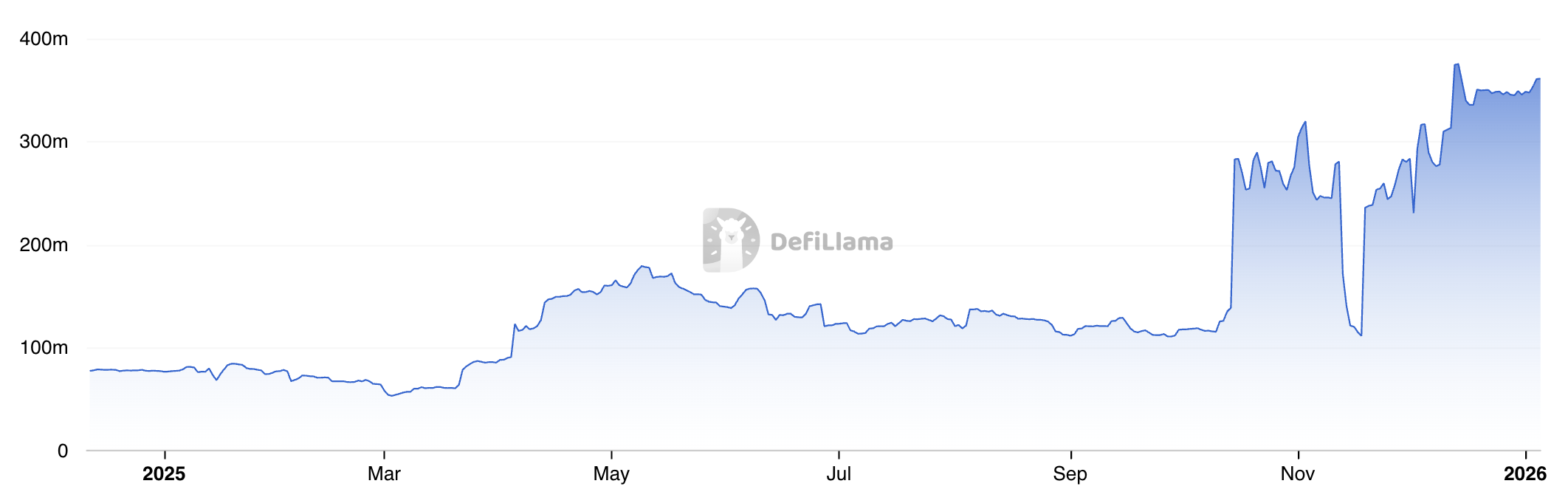
crvUSD, Curve's decentralized CDP stablecoin, grew exceptionally through the year. The system held up remarkably during real market stress, as new integrations and use cases came online across the ecosystem. The peg remained very tight as usual during volatile conditions and crvUSD supply increased from a bit less than 100M to more than 361M, a 3x increase.
crvUSD Improvements and Market Expansion
2025 was a year of steady iteration for crvUSD.
New mint markets and collateral types went live, alongside smart contract upgrades that improved robustness and flexibility. At the same time, work continued on one of crvUSD’s defining features, its adaptive borrow rate, designed to keep the stablecoin tightly on peg.
 Saint Rat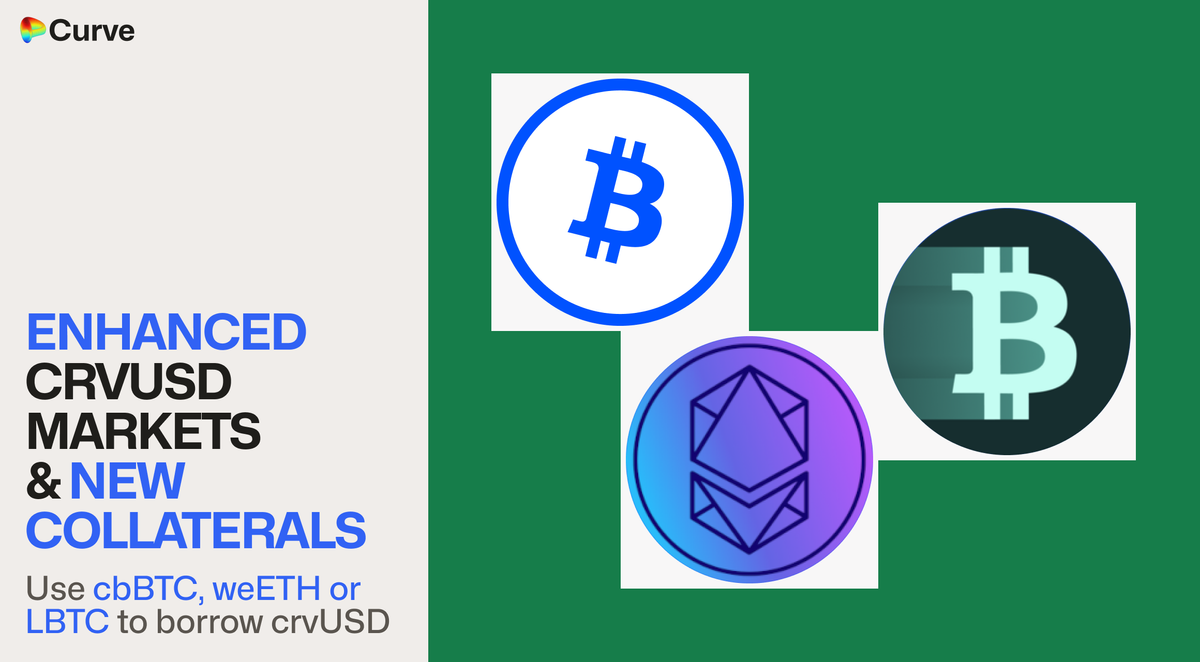
While this mechanism reacts quickly to market conditions, it can also introduce volatility during periods of stress. In 2025, the first changes to smooth borrow rate adjustments were deployed, with further improvements already in the pipeline.
 mo
mo
Liquidation Protection in Practice
Llamalend’s liquidation protection proved itself repeatedly throughout the year. Instead of abrupt liquidations, positions were gradually de-risked, saving a large number of borrowers during volatile market conditions.
 mo
mo
The result was not just better user experience, but a practical demonstration that on-chain lending can handle volatility without relying on centralized risk management. This approach reflects Curve’s broader preference for gradual risk adjustment over abrupt system shocks.
Curve as a Building Block
As Curve’s core primitives matured, a growing number of protocols began using them as foundational infrastructure rather than end products.
Governance also became more accessible. In 2025, the DAO removed the veCRV whitelist, allowing any smart contract to lock CRV. This expanded who can participate in the vote-escrow system and strengthened Curve’s role as shared infrastructure for other protocols.
Resupply
In March, Resupply launched as a protocol built directly on top of Llamalend. By allowing users to borrow reUSD against crvUSD supplied to Curve lending markets, Resupply added an additional layer of capital efficiency without reinventing the underlying mechanics.
 mo
mo
 mo
mo
Resupply quickly became a case study in how Curve primitives can be composed safely and productively.
YieldBasis
Initially teased at Curve’s Belgrade event, YieldBasis launched in 2025 with an ambitious goal: addressing impermanent loss. Built by Curve’s founder, YieldBasis explores a new AMM design that builds directly on Curve’s Cryptoswap pools and crvUSD architecture, enabling liquidity provision for BTC without traditional impermanent loss dynamics.
 mo
mo
To make this model work, YieldBasis leverages liquidity by 2x and uses crvUSD as the leverage layer. By the end of 2025, the protocol was already utilizing over 200M crvUSD, even with market caps in place, highlighting both demand for the model and crvUSD’s growing role as a core building block within the system.
In return for supplying crvUSD, Curve receives YieldBasis’s governance tokens ($YB), which are currently used as incentives to support crvUSD liquidity and ecosystem growth.
A Growing Ecosystem
Resupply, Spectra Finance, liquid lockers, and community boost mechanisms all highlighted the same pattern. Curve works best when others build on top of it.
 mo
mo
 Saint Rat
 mo
mo
Security, Risk, and Protocol Resilience
2025 also reinforced a core lesson of on-chain finance: the frontend can fail without the protocol failing. During the DNS incident, Curve’s contracts continued to operate and markets kept trading, underscoring why immutable infrastructure matters when things go wrong.
 mo
mo
Emergency DAO controls were expanded over crvUSD. LlamaRisk introduced Curve Market Health Scores, providing a transparent framework for assessing risk across markets.

Curve documented incidents openly and in detail. Deep dives into oracle security and the state of Vyper and Curve smart contracts reinforced Curve’s emphasis on clarity, reviewability, and education over obscurity.
 mo
mo
 Saint Rat
Education, Research, and the Community
On the research side, Curve published deeper explorations into veCRV and sustainable tokenomics, as well as Curve’s role as the home of stablecoins. These efforts reinforced Curve’s long-standing belief that education is a form of infrastructure.
 mo
mo
 mo
mo
Curve Ecosystem Day in Belgrade brought together builders, researchers, and community members.
 mo
mo
Deployments and Housekeeping
2025 was also a major year for deployments.
Curve’s DEX infrastructure expanded to more than 9 additional chains, including Sonic, Taiko, Plume, Hyperliquid, XDC, Etherlink, Plasma, Monad, and others. The permissionless nature of pool creation ensured that Curve could continue growing without centralized coordination.
On the infrastructure side, Curve introduced the Curve Block Oracle, a modular and open-source framework for secure multichain messaging, live across more than twenty networks.
 mo
mo
Toward the end of the year, Curve began consolidating and cleaning up deployments, including deprecating the Llamalend deployment on Sonic ahead of the launch of Llamalend V2.
In June 2025, the DAO voted in a dedicated Treasury, allocating 10% of protocol revenue to a reserve under direct DAO control. Previously, almost all fees were redistributed to stakeholders and liquidity providers, and there was no mechanism to grow a treasury on an ongoing basis. The creation of this Treasury gives the DAO a more durable financial foundation for audits, development, risk mitigation, and other long-term priorities, reflecting a more mature governance approach while preserving full DAO oversight.
Looking Ahead: What 2026 Is About
2025 was about foundations, 2026 is about expansion.
The roadmap ahead points toward on-chain FX markets, crvUSD expansion through YieldBasis and Llamalend V2, and a new generation of borrowing and lending primitives.
By the end of 2025, Curve had positioned itself not just as the home of stablecoin liquidity, but as a full DeFi suite spanning exchange, lending, and emerging FX markets. With crvUSD as a settlement layer, FXSwap enabling on-chain foreign exchange, and Llamalend V2 expanding lending beyond a single asset, the core pieces are now in place.
Five years in, Curve is not slowing down. It is deliberately preparing for its next phase.
Llamalend V2: Scaling Lending Beyond crvUSD
Expected to launch in early 2026, Llamalend V2 marks a major expansion of Curve’s lending framework. It introduces stronger risk steering through borrow limits, improved internal accounting, and upgraded contract standards, giving the DAO more precise tools to scale markets safely. Together, these changes strengthen security while making Llamalend easier to integrate into the broader Curve ecosystem.
Most importantly, Llamalend V2 removes the strict dependency on crvUSD as the sole borrowable asset. Lending markets can now be created for widely used pairs such as ETH against USDC or BTC against USDT, with the option for the DAO to apply admin fees on non-crvUSD markets. This expands Curve’s addressable lending markets while creating new, sustainable revenue streams for the DAO.
Capital efficiency is also extended through support for LP tokens and fixed-yield assets as collateral, allowing users to earn yield while borrowing against the same positions. Combined with optional mechanisms that reduce risk automatically as positions weaken, Llamalend V2 forms a natural bridge between Curve’s stablecoin liquidity, emerging on-chain FX markets, and the next generation of lending. Alongside FXSwap and crvUSD, it is a key pillar in Curve’s push toward a more complete and interconnected DeFi suite in 2026.